The integration of Artificial Intelligence (AI) into physiotherapy is revolutionizing patient care, offering innovative tools that improve assessment, treatment, and rehabilitation. As healthcare evolves, AI is becoming an essential ally in delivering smarter, more efficient physiotherapy.
1. Enhanced Assessment and Diagnosis
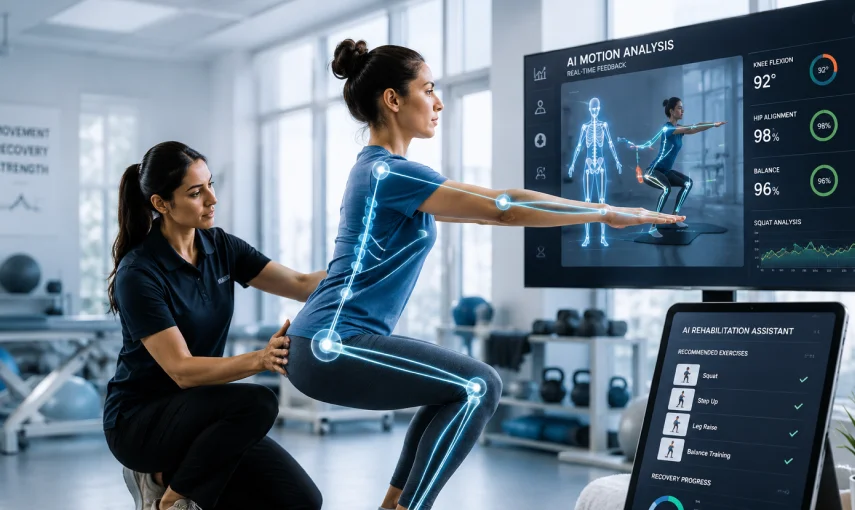
AI systems are transforming traditional evaluation methods. Using machine learning, these tools analyze data from wearable sensors and video input to detect abnormalities in movement, posture, and balance (1). This level of precision enables early diagnosis and helps physiotherapists plan more accurate interventions.
2. Personalized Rehabilitation
AI helps create customized rehabilitation programs based on a patient’s real-time progress. Adaptive algorithms modify exercise difficulty and frequency as patients improve, reducing the chances of overexertion or stagnation (2). This responsiveness enhances recovery speed and keeps patients engaged in their therapy.
3. Remote Monitoring and Tele-rehabilitation
Tele-rehabilitation platforms now use AI to monitor patients at home. These systems track adherence to exercise, detect incorrect movements, and alert therapists in case of deviations from the plan (3). This allows for continued supervision even when in-person sessions aren’t possible, a benefit that became crucial during the COVID-19 pandemic.
4. Robotics and Virtual Reality Integration
AI-driven robotic exoskeletons are assisting patients with walking or limb movements during therapy. Combined with virtual reality, patients can perform engaging exercises in a gamified environment, improving motivation and reducing therapy fatigue (4). The AI component ensures these devices adapt to the user’s specific recovery pace.
5. Clinical Education and Decision Support
AI is also a tool for physiotherapists themselves. Through intelligent simulation platforms, students and clinicians can practice diagnostics and decision-making in virtual environments (5). AI-driven systems can even suggest therapy approaches by analyzing vast databases of case outcomes.
Conclusion
AI is not replacing physiotherapists but rather enhancing their ability to provide personalized, efficient care. From assessment to education, it’s clear that AI is shaping a future where physiotherapy is more data-driven, accessible, and patient-focused. Embracing these technologies will help practitioners meet the dynamic challenges of modern rehabilitation.
References
- Physio-Pedia. (2023). Artificial Intelligence in Health Care and Rehabilitation. Retrieved from https://www.physio-pedia.com/Artificial_Intelligence_%28AI%29_In_Health_Care_and_Rehabilitation
- IJSR. (2023). Leveraging Artificial Intelligence for Enhanced Physiotherapy. Retrieved from https://www.ijsr.net/archive/v12i4/SR23045123746.pdf
- ScienceDirect. (2023). Artificial Intelligence in Physical Rehabilitation: A Systematic Review. Retrieved from https://www.sciencedirect.com/science/article/pii/S0933365723002075
- IJAICS. (2024). AI in Rehabilitation and Physical Therapy: Personalized Recovery Plans. Retrieved from https://ijaics.org/index.php/IJAICS/article/view/8
- OpenPhysio. (2022). Artificial Intelligence in Clinical Practice: Implications for Physiotherapy Education. Retrieved from https://www.openphysiojournal.com/article/artificial-intelligence-in-clinical-practice-implications-for-physiotherapy-education/