A Moment in the OR..
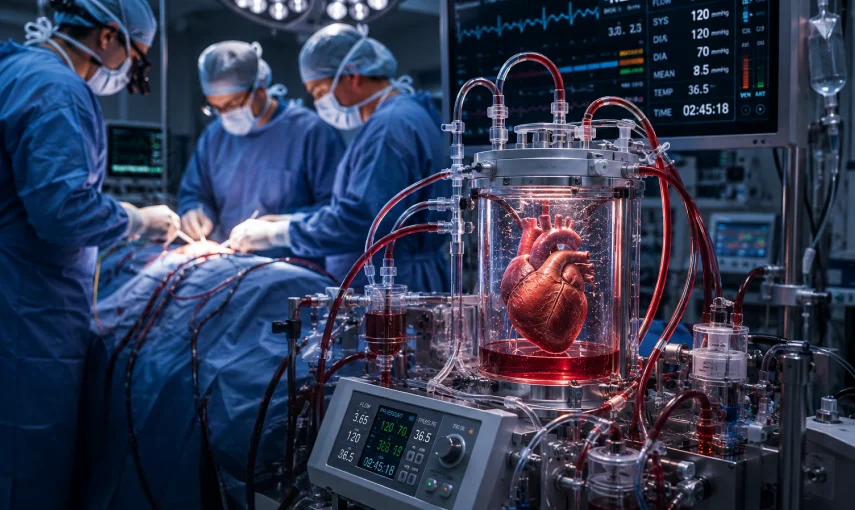
The clock on the wall of the operating room ticks steadily as a team of specialists prepares for a complex coronary artery bypass graft (CABG) surgery. The patient lies motionless under the bright surgical lights, already sedated and intubated, with monitors displaying every vital sign in real time. The air is thick with concentration as the cardiac surgeon makes a precise incision down the center of the chest, carefully dividing the breastbone to access the heart
As the surgeon exposes the heart, the anesthesiologist vigilantly monitors the patient’s heart rate, blood pressure, and oxygen saturation, ready to adjust medications at a moment’s notice Meanwhile, a key member of the team steps forward: the perfusionist, often called the ‘silent guardian’ of the OR.
The perfusionist expertly sets up the heart-lung machine, connecting it to the patient’s circulatory system. With the heart about to be stopped, the perfusionist initiates cardiopulmonary bypass: blood is diverted from the heart into the machine, where it is oxygenated and maintained at the correct temperature before being returned to the body. This technology ensures that every organ continues to receive life-sustaining oxygen and nutrients, even as the heart is still.
Perfusion technology is the science and practice of temporarily supporting or replacing the functions of the heart and lungs during surgery. Using specialized equipment like the heart-lung machine, perfusionists ensure that blood continues to flow and deliver oxygen to the body even when the heart is stopped.
A Day in the Life: Meet the Perfusionist
Perfusionists are highly trained experts who operate life-support machines. They work closely with surgeons and anesthesiologists, constantly monitoring and adjusting the patient’s vital parameters. Their expertise is crucial in cardiac surgeries, organ transplants, and critical care situations.
Modern perfusion technology has come a long way from its early days. Today’s machines are smaller, smarter, and safer, featuring real-time monitoring, automated controls, and biocompatible materials. Some hospitals are even integrating artificial intelligence to help personalize care for each patient.
Origin, Challenges and the Road Ahead
Operating on the heart was thought to be impossible until the invention of the cardio pulmonary bypass in the 1950s. In 1953, Gibbon successfully performed an open heart procedure using a heart lung machine, which worked on the principle of extracorporeal oxygenation; this laid the foundation for modern day techniques used in cardiothoracic surgery. Despite its advances, perfusion technology faces challenges such as high costs, the need for specialized training, and integration with hospital systems. However, ongoing research and innovation promise even more reliable machines and broader access to expert care in the future.
Conclusion: The Silent Saviors
As the surgery ends, the perfusionist gradually weans the patient off the heart-lung machine, allowing the heart to resume its natural rhythm. The surgeon closes the chest, and the team breathes a collective sigh of relief the perfusionist quietly steps back, their vital role complete. Perfusion technology may work behind the scenes, but its impact is front and center in every life it helps save.